The number of clients who come to me having spent hours researching luxury cruise lines — and who are more confused than when they started — is genuinely remarkable. It’s not that the information isn’t out there. It’s that there’s so much of it, and very little is designed to help you compare things that are fundamentally different experiences.
Here’s what most people don’t realise: luxury cruise lines aren’t one category. They’re a whole spectrum, stretching from large premium ocean ships carrying several thousand passengers to intimate vessels carrying fewer than a hundred. The difference between them isn’t just price — it’s pace, atmosphere, itinerary depth, and the kind of traveller you actually are.
Let me walk you through it.
The Luxury Cruise World Is Bigger Than You Think
Think of it the way you’d think about accommodation. A well-run city hotel is different from a boutique property in a converted Tuscan villa, which is again different from a private island resort in the Maldives. Same fundamental concept — you sleep there, someone makes the bed. Wildly different experience.
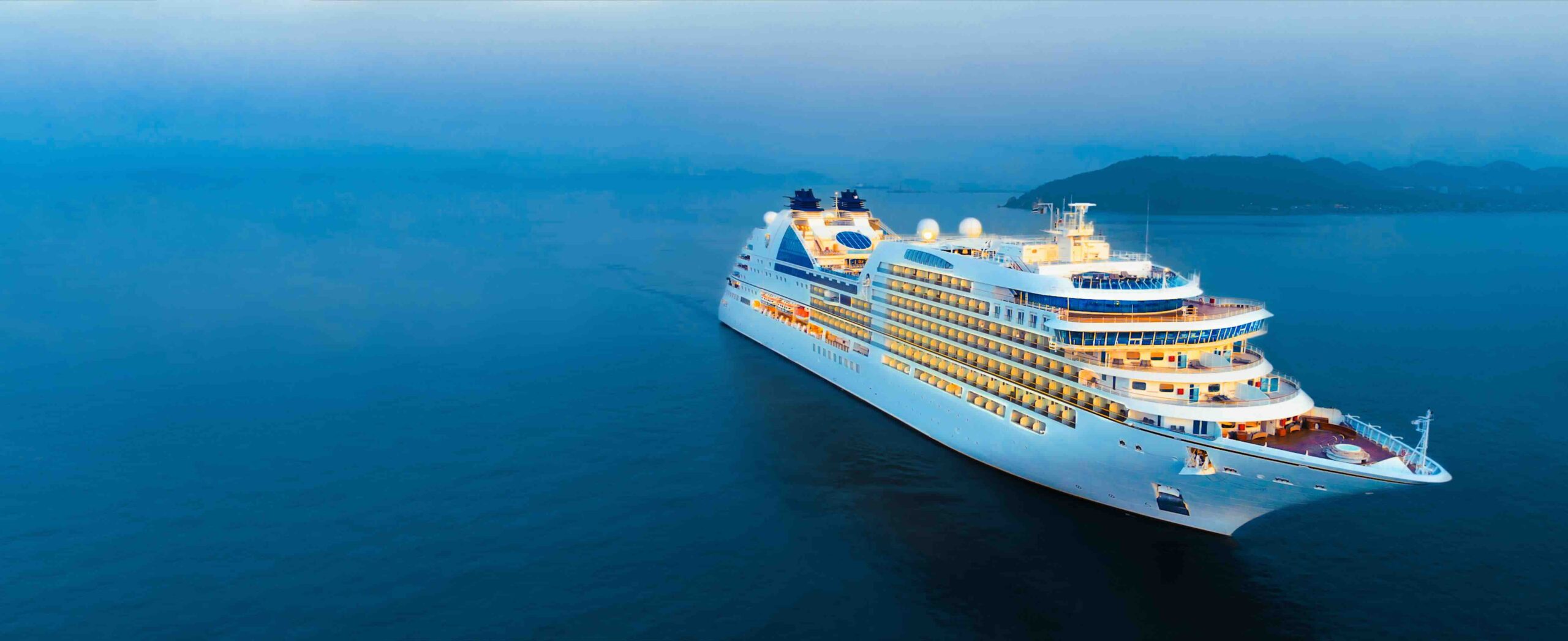
Luxury cruise lines work the same way. The category stretches from the upper end of mainstream ocean cruising — ships carrying 2,000-plus passengers with genuinely impressive service — right through to ultra-luxury small-ship experiences where the crew-to-passenger ratio approaches one-to-one and almost nothing is generic.
Knowing that distinction matters when you’re spending serious money on a trip you’re expecting to be extraordinary.
Large-Ship Luxury: The All-Inclusive Ocean Experience
At the upper end of large-ship cruising, you’ll find names like Oceania and Crystal. At the true luxury tier, Regent Seven Seas and Silversea. These ships carry anywhere from a few hundred to a couple of thousand passengers, and the experience — at the right end — is genuinely excellent.
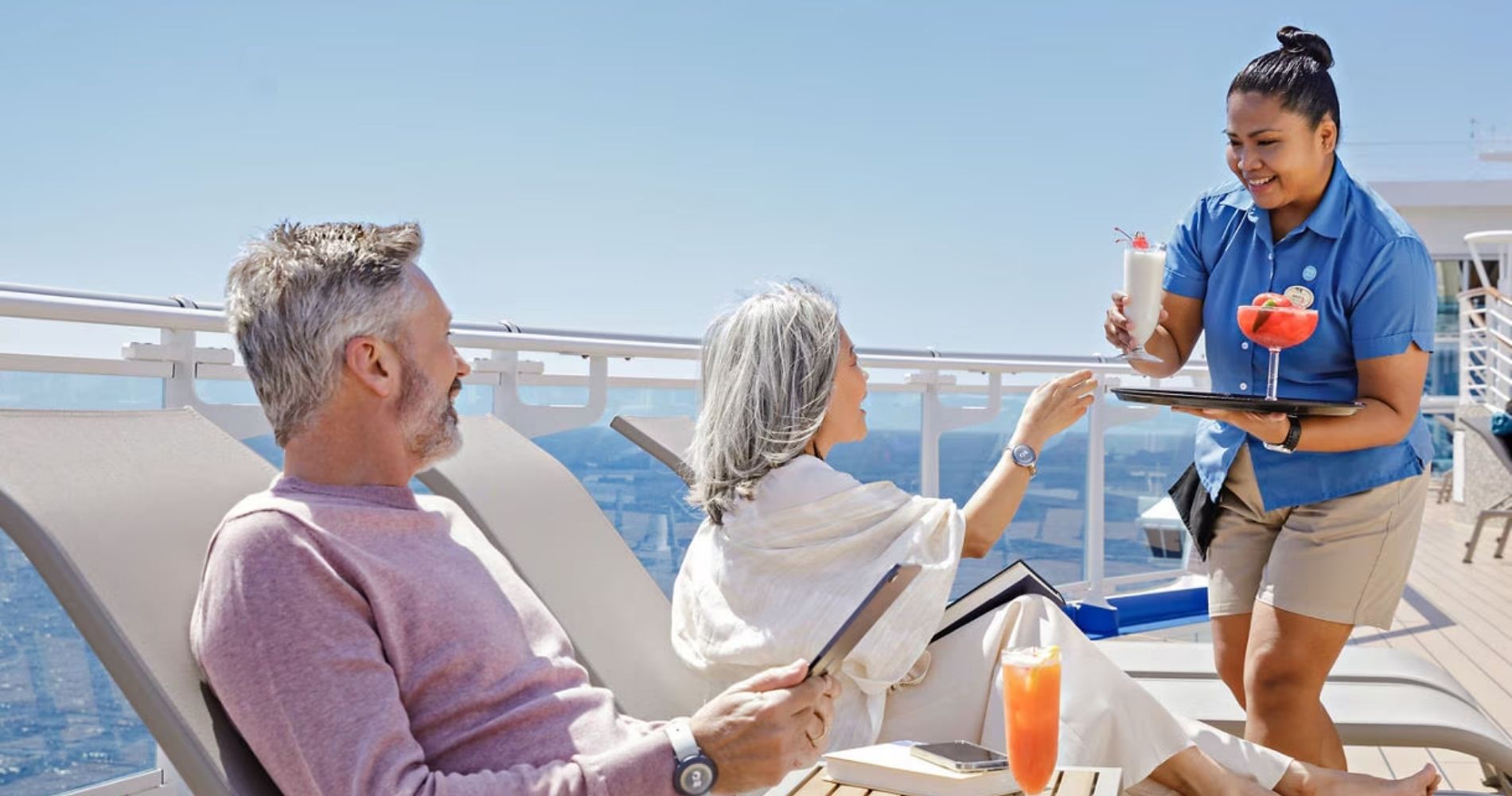
The appeal is breadth. Specialty restaurants, world-class entertainment, enrichment programmes, spa facilities, pools, and activities — it’s all there, and at the luxury end it’s typically included in the fare. Regent Seven Seas, for instance, operates on a fully all-inclusive model: flights, shore excursions, drinks, gratuities — all covered. You step off the plane and the rest is handled.
But here’s the thing: the larger the ship, the more structured the experience tends to be. Shore excursions often run in groups. Embarkation takes time. When the ship calls into Dubrovnik or Santorini, so do several other vessels — and you’ll feel that.
For some travellers, that’s perfectly fine. For others, it’s a dealbreaker.
Luxury River Cruising in Europe and Beyond
River cruising sits in a different category entirely. A luxury river cruise in Europe — along the Rhine, the Danube, the Douro, the Seine — typically carries between 80 and 200 passengers on a ship that goes where ocean vessels simply can’t: through the heart of cities, past medieval villages, beside vineyards and castles that road travellers only glimpse from a distance.
The pace is slower. More intimate. You dock in the centre of town rather than a port kilometres out. You wake up to a new landscape every morning and go to sleep in the same comfortable cabin every night.
Lines like AmaWaterways, Uniworld, and APT have built strong reputations here — and for the right traveller, a luxury river cruise through Europe is genuinely one of the finest travel experiences available. I’ve had clients who’ve done it once and come back three, four, five times. The landscapes shift with the seasons, the itineraries vary endlessly, and there’s a quality to the experience — the closeness to the destinations, the scale — that larger ocean cruising can’t quite replicate.
Small-Ship and Expedition Cruising
If you’re looking for something that takes luxury in a different direction entirely, luxury small ship cruises and expedition voyages are worth understanding.
Small-ship ocean cruising — think Silversea Expedition, Seabourn, or Ponant — typically means vessels carrying fewer than 300 passengers. The crew-to-passenger ratio is high. The service is extraordinarily attentive. Itineraries reach places that larger ships simply cannot access — smaller Mediterranean ports, remote Pacific islands, Arctic and Antarctic wilderness.
A luxury expedition cruise is perhaps the most rarefied option of all. These voyages take you to genuinely remote places — including Antarctica — with expert naturalists and wildlife guides on board. The experience combines real adventure with exceptional comfort. You’re in a stateroom with fine linens and a proper wine list. You’re also in a Zodiac the following morning, watching penguins waddle past in conditions no other form of travel could put you in.
It’s not for every traveller. But for the right person, nothing else quite compares.
How to Choose the Right Luxury Cruise Line for You
This is where it gets personal — and it’s honestly why I do what I do.
The right choice depends on what you actually want from the experience. How much do you value structure versus freedom? Are you happiest with a full roster of activities, or do you prefer fewer fellow passengers and a quieter atmosphere? Do you want to go somewhere iconic — the Mediterranean, the Caribbean, Alaska — or somewhere genuinely remote? How important is all-inclusive simplicity versus flexibility?
There’s no universally correct answer. Someone who had the trip of their life on a Regent Seven Seas voyage might feel completely out of place on a Ponant expedition ship — and vice versa. What I do is ask the right questions and match the experience to the person, not the brochure to the budget.
That matching process — finding the itinerary, the ship, the timing that genuinely fits who you are — is the part that gets me most excited about this work.
If you’re beginning to think about a cruise and want to talk through the options honestly — no pressure, no pitch — I’d love to have that conversation. Reach out at sunraysiaboutiquetravel.com.au and we’ll find the right fit for you.