
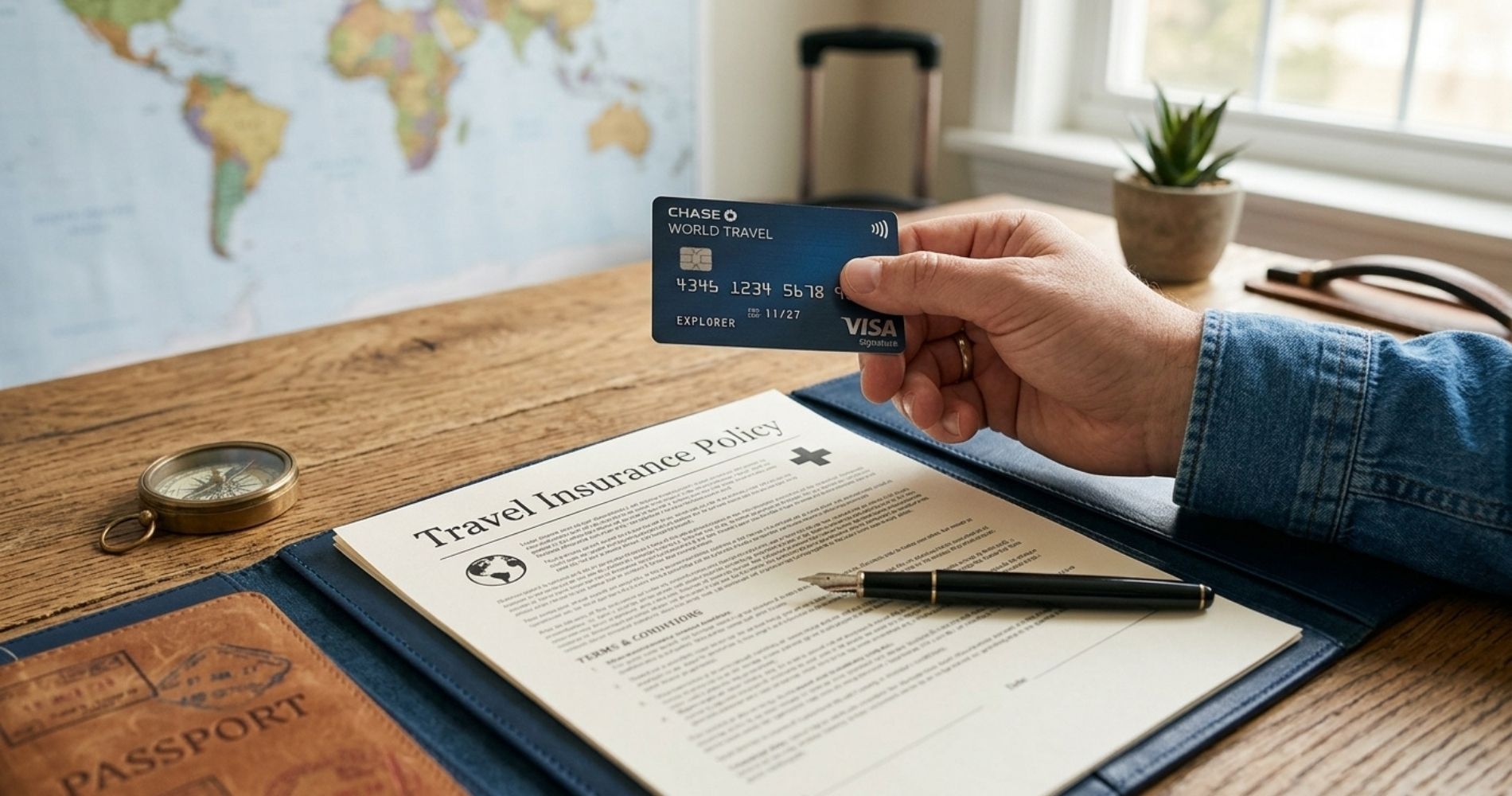
It’s a conversation I have with nearly every client who books an overseas trip:
“I’ve got travel insurance through my credit card, right? So I’m covered?”
The answer is almost always more complicated than they expect. And it’s a complication that’s only gotten worse in recent years.
The Credit Card Travel Insurance Trap
Here’s what most people don’t realise: credit card travel insurance is a benefit, not a policy. It’s offered as a perk to cardholders, which means credit card companies have every incentive to make it sound comprehensive while keeping the actual coverage… well, let’s say selective.
And here’s the thing that’s changed recently: credit card companies have been quietly reducing their coverage to save costs.
You might have had excellent credit card travel insurance five years ago. But if you haven’t actually read your current card’s policy document—and most people haven’t—you might not know that your coverage has been significantly scaled back.
What Credit Card Travel Insurance Actually Covers
Credit card travel insurance typically includes:
- Trip cancellation (if you have to cancel your trip for specific reasons)
- Trip delay (if you miss a connection or flight is delayed beyond a certain period)
- Lost luggage or baggage delay (partial coverage)
- Emergency medical expenses (often limited in scope and amount)
- Emergency evacuation (sometimes, but with significant restrictions)
But here’s where it gets tricky: each of those coverages comes with fine print. Lots of fine print.
Common limitations include:
- Coverage only applies if the cardholder purchased the ticket with the credit card
- Pre-existing medical conditions are typically excluded
- Adventure activities may not be covered
- Coverage limits are often quite low (sometimes as low as $5,000 for medical emergencies)
- Waiting periods before coverage kicks in
- Claims must be made within specific timeframes
- Cancellation is only covered for very specific reasons (not, for example, if you simply change your mind)
The Recent Cost-Cutting Problem
Over the past 3–4 years, credit card companies have reduced coverage across the board. Some have raised deductibles. Others have lowered benefit caps. A few have moved entirely away from offering travel insurance as a standard benefit.
The reason? It saves them money. And they’re betting that most cardholders won’t notice because they won’t read the fine print.
This creates a dangerous situation: you might think you’re covered, but when something actually goes wrong—a medical emergency in a foreign country, a flight cancellation that forces you to rebook at significant cost—you discover your coverage is far more limited than you expected.
By then, it’s too late.
Why Dedicated Travel Insurance Is Different
A dedicated travel insurance policy is designed to be comprehensive, not as an afterthought to a credit card product.
A proper travel insurance policy typically offers:
- Higher benefit caps for medical emergencies (which is often where costs can spiral)
- Pre-existing condition options (which credit card policies almost never cover)
- Adventure activity coverage (important if you’re planning to do anything beyond sitting in a hotel)
- Cancel for any reason options (if you want that level of protection)
- Evacuation and repatriation coverage (crucial if you’re travelling to remote areas)
- Lost document assistance (help replacing passports, visas, etc.)
- Clear, upfront terms about what is and isn’t covered
The cost? Often much less than you’d expect, especially if you’re booking a longer trip or travelling to a higher-risk destination.
What You Should Do Before Your Next Trip
Don’t just assume you’re covered. Actually read your credit card’s travel insurance document—or better yet, call and ask them specifically what’s covered under your card.
Here are some key questions to ask:
- What’s the maximum benefit for emergency medical expenses?
- Are pre-existing medical conditions covered?
- Am I covered if I have to cancel for reasons beyond the listed exclusions?
- Is adventure/sports coverage included?
- What’s the process for making a claim, and how quickly do I need to do it?
- If I’m travelling with my family, does the benefit extend to dependents?
Listen to the answers carefully. You might find your coverage is fine. Or you might discover a significant gap.
Where Dedicated Insurance Makes the Most Sense
Dedicated travel insurance becomes particularly important when:
- You’re travelling for an extended period (two weeks or more)
- You’re travelling to remote areas or developing countries
- You have a pre-existing medical condition
- You are travelling on a cruise
- You’re planning activities beyond standard tourism (hiking, diving, adventure sports)
- You’re travelling with family and want comprehensive coverage
- You’re spending significant money on the trip and want cancellation protection
- The trip is expensive and you want “cancel for any reason” coverage
In any of these scenarios, the cost of a dedicated policy is a genuine investment, not just an add-on.
How I Can Help
Here’s where my role comes in: I’m not an insurance broker, and I can’t recommend a specific policy to you. But what I can do is help you understand your options.
When you’re planning your trip with me, I always bring up travel insurance. We’ll talk about:
- What level of coverage makes sense for your specific journey
- What gaps you might have in your credit card coverage
- The different types of dedicated policies available
- What questions to ask insurance providers before you buy
- How to structure your booking to make sure your coverage is valid
Then you can make an informed decision. You might decide credit card coverage is sufficient for your trip. Or you might decide that a dedicated policy is the right choice. Either way, it will be your decision based on actual information.
The most important point here is to oobtain the Product Disclosure Statement (PDS) from your credit card company and compare it to the PDS you receive from one of my recommended insurers and make sure you read the fine print. The devil is in the detail.
One more thing. I recommend having travel insurance in place when you pay your first deposit. That way, your deposit and subsequent payments are covered in an insurable event. Don’t leave it to the day before the trip when you have paid for your whole holiday.
I’m genuinely happy to have this conversation. Travel insurance isn’t the most exciting topic, but it might be one of the most important decisions you make before your trip. If something goes wrong overseas and you’re not properly covered, that’s when you’ll wish you’d spent 20 minutes talking through your options.
The Bottom Line
Credit card travel insurance has a role to play—but it’s not a complete solution for most overseas travel. The landscape has changed in recent years, and coverage has been quietly scaled back across the industry.
Before you board that plane, know exactly what you’re covered for. It’s a conversation worth having, and it’s one I’m here to help with.
Further Information
From ‘The Australian’ – 05 Sep 26
A dramatic overhaul of travel insurance linked to credit cards has prompted warnings for consumers to double-check the fine print and consider changing providers altogether.
Ahead of the Reserve Bank banning credit card surcharges from October 1, all the major banks have been making significant changes to their rewards program rules, including credit cards’ complimentary travel insurance that cardholders have received for many years.
Canstar data insights director Sally Tindall said it was “no longer a given” that credit card travel insurance policies could provide adequate protection.
“When heading overseas, travel insurance is the second-most important thing to pack with you, after your passport,” she said.
Ms Tindall said cardholders had used the insurance as a free safety net, but many of the new changes were “so extreme that travellers may decide to ditch the credit card policy for a separate one that covers them for a lot more than an unexpected trip to the hospital”.
“You shouldn’t assume the policy you had last year, or even for your last trip, will still provide the same protection now,” she said.
“It’s also worth double-checking what you have to do, if anything, to activate your insurance, as this may have changed recently as well.”
Canstar has found all of the big four banks have announced travel insurance changes in recent months. Among the many changes, here are some of the more significant moves.
Commonwealth Bank
CBA’s major loyalty program revamp, announced in August, included capping some types of cover and switching insurers from Cover More, owned by Swiss-based Zurich Insurance Group, to Cover Genius, a US global insurance and technology company that operates in 60 countries.
Review websites typically rate Cover Genius below Cover More for customer service, with Trustpilot giving it a “poor” rating from 242 reviews and productreview.com.au rating its XCover subsidiary 2.1 stars out of five from 556 reviews.
Westpac
The bank is scaling back complimentary travel card insurance, scrapping cover for trip cancellation, travel delay, vehicle excess and accidental death and luggage for international travellers, leaving only limited medical cover.
Customers who booked a trip or are planning to book a trip between now and October 1 can still get cover under the existing arrangement, even if their trip is at a later date, provided they meet the current eligibility criteria and the trip finishes by September 30 next year.
ANZ
The bank is cutting travel insurance altogether for some rewards credit cards, including ANZ Rewards Black and ANZ Rewards Platinum, and paring it back for its frequent flyer cards. The changes are occurring in December and March.
Unlike Westpac, a cardholder’s cover will depend on when the insurable event takes place rather than when the customer booked their travel. Any travel after the change date will be under ANZ’s new policy structure.
NAB
It made significant travel insurance changes back in May, including axing international, domestic travel and rental car excess insurance for certain cards, and introduced significantly lower cover limits for other cards in July 2025.
NAB also made changes to insurance for travel delay expenses and some cards reduced international cover from up to three months to up to 30 consecutive days.
What about Amex?
Travel insurance through American Express cards, which are popular with frequent flyers and were among a handful of policies that paid out claims in the pandemic, has not yet been altered.
“There are no changes to announce at this time. We continue to evaluate the implications of these regulatory changes for our products,” an American Express spokeswoman said, and noted that insurance and rewards remained part of Amex’s commitment to value for card members.
Australian Travel Industry Association chief executive officer Dean Long said he did not have a good opinion of the free travel insurance provided by credit cards.
“We always say you should be purchasing your insurance independent of your payment choice,” he said.
“If you have a comprehensive policy, fit for purpose for your trip, either purchased with the insurance company direct or through a travel agent, you’re going to get a better result.
“There was always a level of confusion for consumers about how you activate it. There’s been a limited understanding of that insurance product to begin with, and now there will be a chance that consumers may think they are covered and they’re not.”
Mr Long said there was mass confusion among consumers about the RBA credit card changes, and he did not expect people to get clarity for another six months.
He said while credit card travel insurance should be ignored, proper policies were vital.
“If you can’t afford travel insurance, you can’t afford to travel,” he said. “The minute something goes wrong, if you sprain your ankle, automatically you could be up for a hospital fee more than the entire cost of the holiday. A course of antibiotics in the US is almost worth more than a flight.”
Sunraysia Boutique Travel helps clients understand their travel insurance options before booking. If you’re planning an overseas trip and would like to discuss what coverage might make sense for your specific journey, I’d be happy to chat. I can’t recommend a particular policy, but I can help you ask the right questions and understand your options.
Disclaimer: This blog post is educational in nature and does not constitute financial or insurance advice. For specific advice about your travel insurance needs, please consult with a qualified insurance broker or your credit card provider directly.